Alan Maton, who was in charge of sending orders to Bug-Byte, asked Matthew Smith for a game in the spirit of Donkey Kong. Smith brought a platformer about a miner who collects flashing objects in caves. In 1983, Manic Miner appeared on the ZX Spectrum. In August of the same year, it overtook Jet Pac in the UK sales chart.
The rule of the game is simple. In each of the twenty caves, exactly the size of one screen, objects flash, and the miner Willy must collect them to the end of the supply of oxygen. Then you need to get to the portal and move on. At first there were sixteen caves, but Smith found a way to cram four more and finished the work in August 1983. It was inspired by the game Miner 2049er from Atari computers.
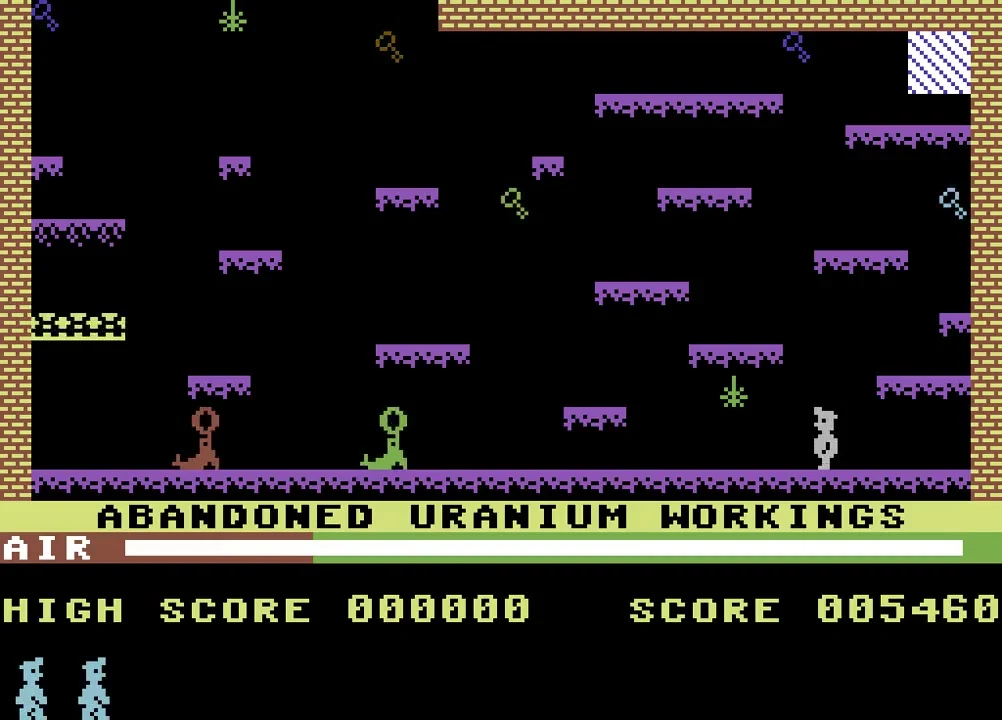
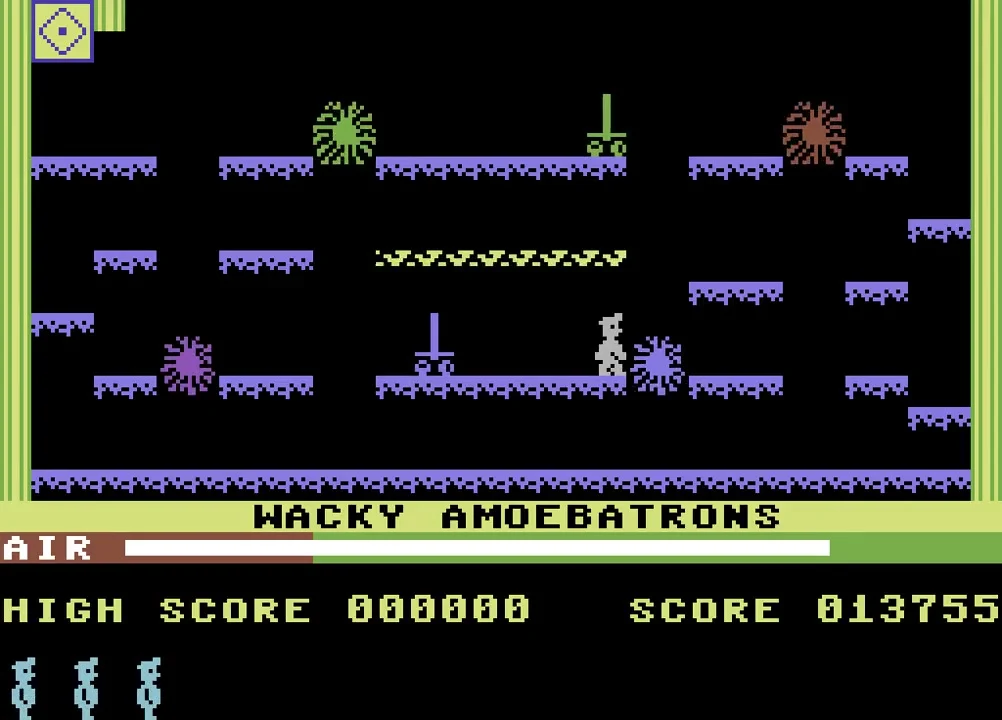
Enemies in the instructions were listed with humor: poisonous panties eyes, spiders, mucus and, worst of all, rabid mining robots. They walk on specified routes at a constant speed, so the accuracy of the jump decides everything. From a high altitude, Willie is also broken. Extra life is given for every 10,000 points. Cave names like Abandoned Uranium Workings, Wacky Amoebatrons and Skylab Landing Bay sound like tabloid fiction headlines.
They picked up the classical music. During the game, Edward Grieg’s “In the Cave of the Mountain King” sounds from the music for Ibsen’s “Pere Gunt”, and an arrangement of the “Blue Danube” plays on the title screen. For a home computer in 1983, this choice looked daring and was remembered immediately.
The business story was no less fun. Smith's previous game, Styx, Bug-Byte bought the whole for £3,000, and Manic Miner published it under license. Later that year, Smith terminated that license. On November 28, 1983, Software Projects, a company founded by Smith, Maton and Liverpool businessman Tommy Barton, released its own version. In it, some of the enemies were changed: the Bug-Byte logos were replaced by Penrose triangles, the trademark of Software Projects. Bug-Byte continued to sell its version throughout Christmas time, and the Software Projects version became the most popular version only in early 1984.
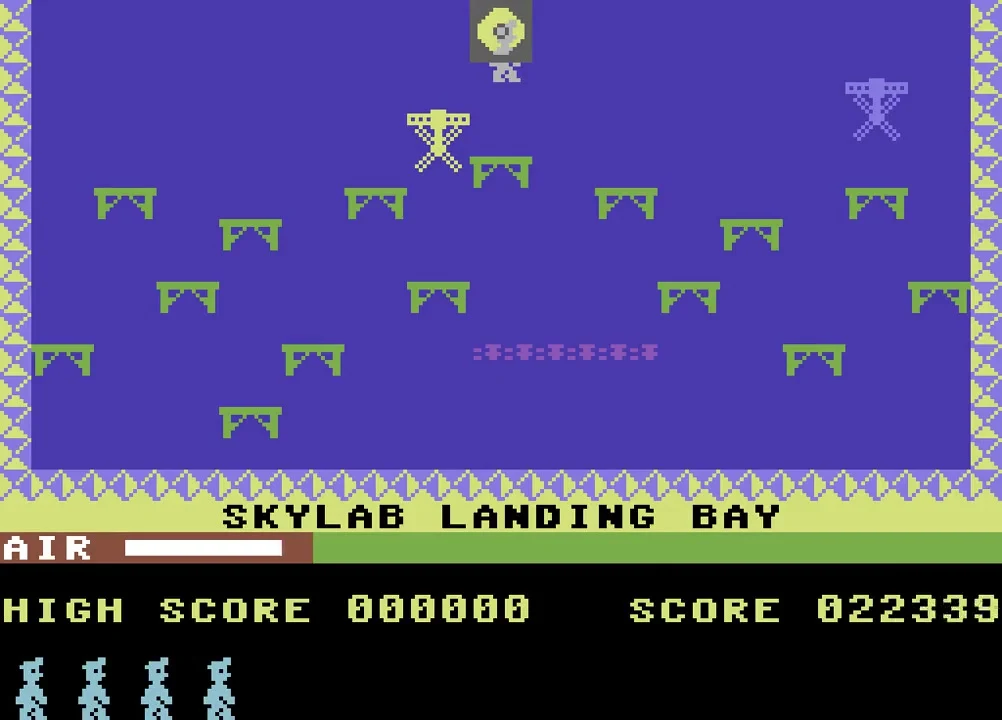
Readers of Computer and Video Games at the Golden Joystick Awards in 1983 recognized Manic Miner as the best arcade game, and in the nomination “Game of the Year” put in third place. The Commodore 64 version topped the chart at the beginning of 1984 and became the best-selling game on this computer, and the Spectrum took third place at the end of the year. In 1991, ACE magazine called it “the first great platform game for home computers,” and Retro Gamer ranked it among the most influential platformers.
Willie quickly found a sequel: Jet Set Willy. The game itself was moved to Amiga, Amstrad CPC, BBC Micro, Commodore 64, Game Boy Advance and mobile phones. Forty additional caves, invented by the winners of the competition, appeared in the version for SAM Coupé. In 2012, Manic Miner 360 was released on the Xbox 360, but along with the Xbox Live Indie Games store, it was withdrawn from sale in November 2017. And in the version for Dragon 32 hidden cheat: just dial PPENGUIN.
If nostalgia for eight-bit platformers does not let go, we haveDarkwing Duck for NES and Dendy.
Manic Miner
ПлатформыZX Spectrum, Commodore 64
Дата выхода1983
РазработчикМэтью Смит
ИздательBug-Byte, Software Projects