In the mid-eighties, Jordan Mehner, a Yale student, had already graduated Karateka and knew what he wanted to do next. He wanted a game where the hero moves like a living person, not like a set of squares. The camera for this was found in the family: Mechner asked his younger brother David to put on white clothes and run in front of the lens.
The shooting took place in the parking lot. David ran, jumped across imaginary precipices, clinged to the edge and pulled up, and the older brother recorded everything on VHS. And then the worst part started. Mehner paused the cassette, redrawed the pose of each frame and transferred it to pixels. The method is called rotoscopy, and it is because of it that the prince moves smoothly, with heaviness in the jump and caution at the edge of the plate.
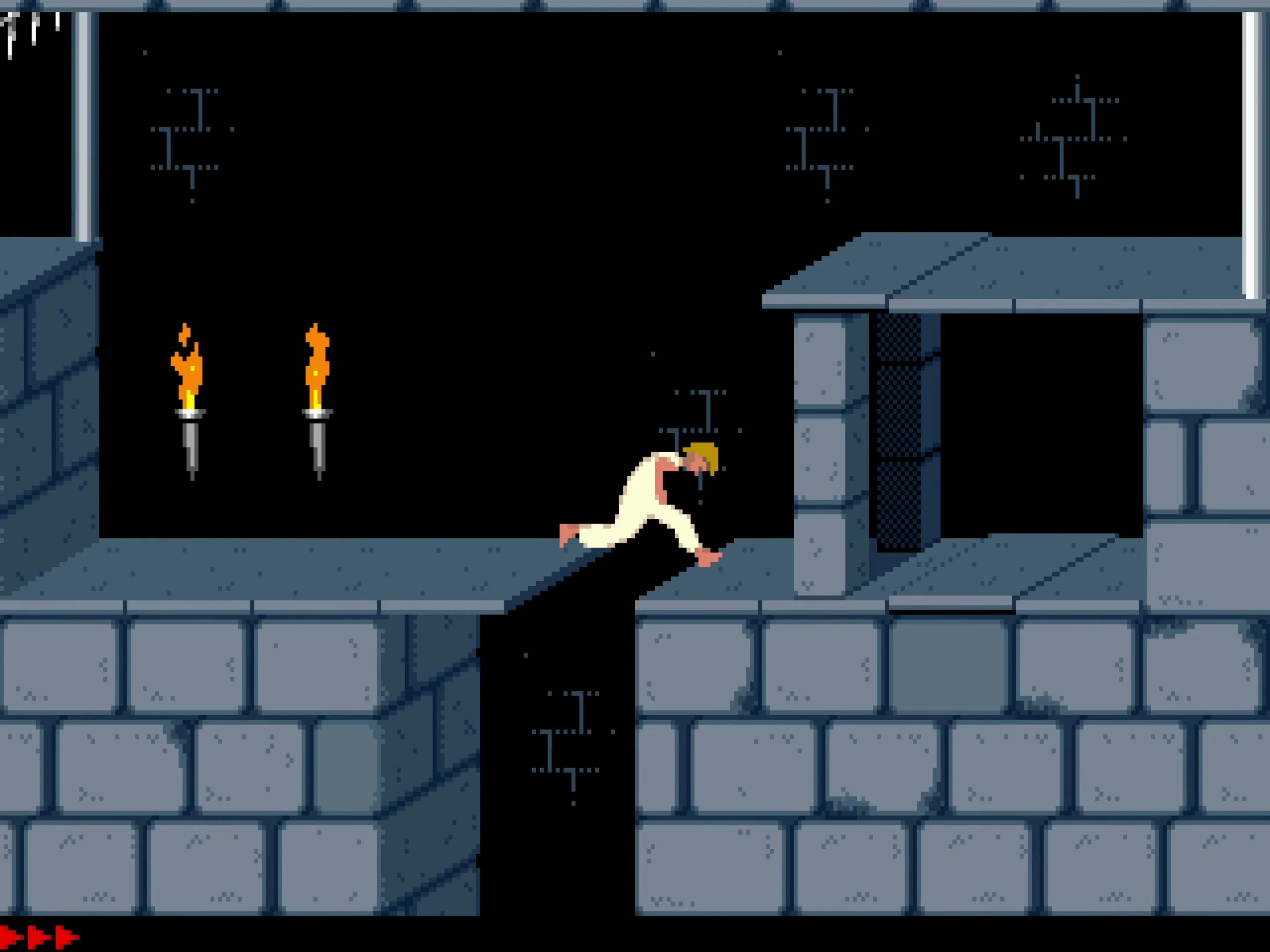
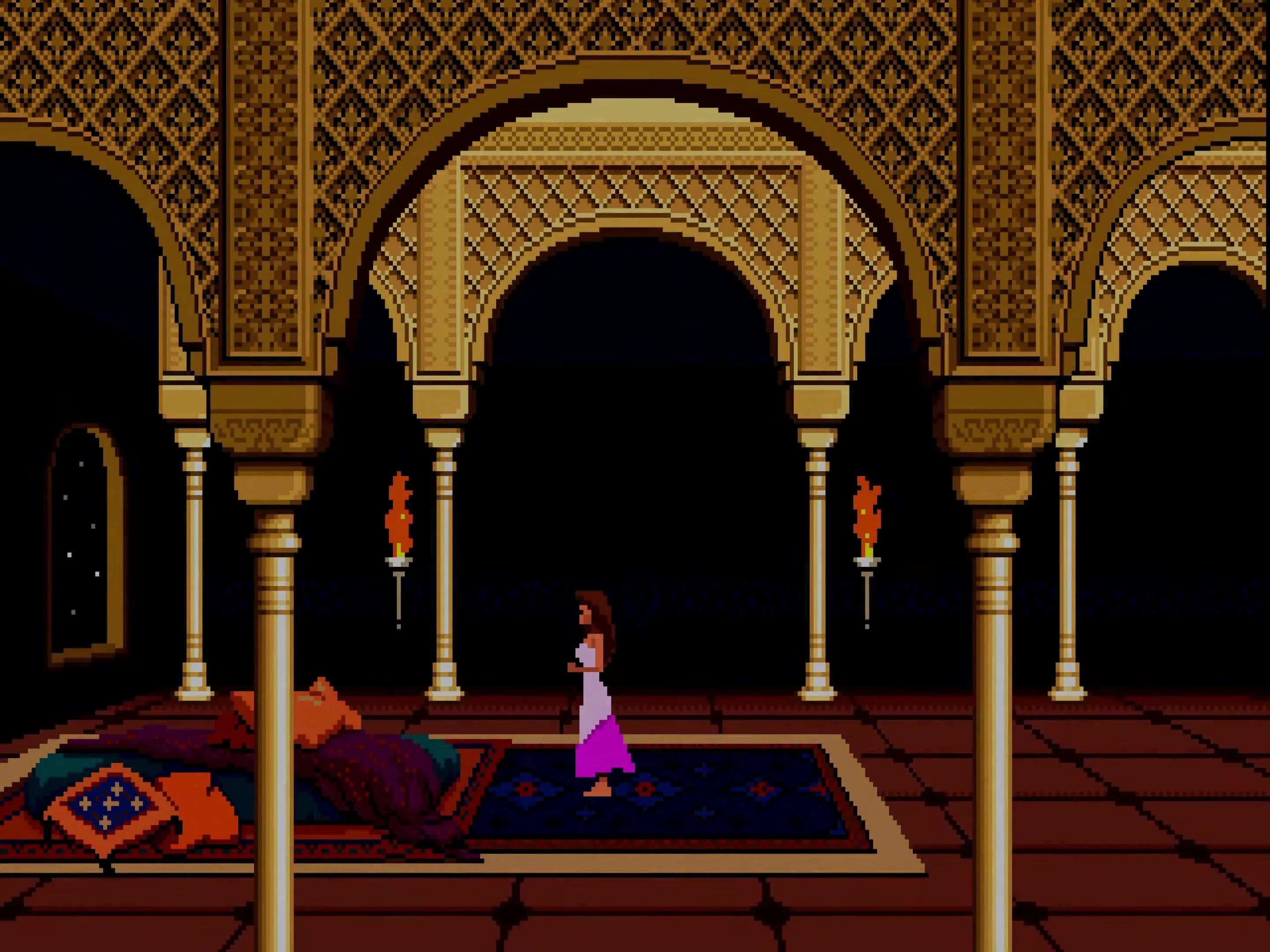
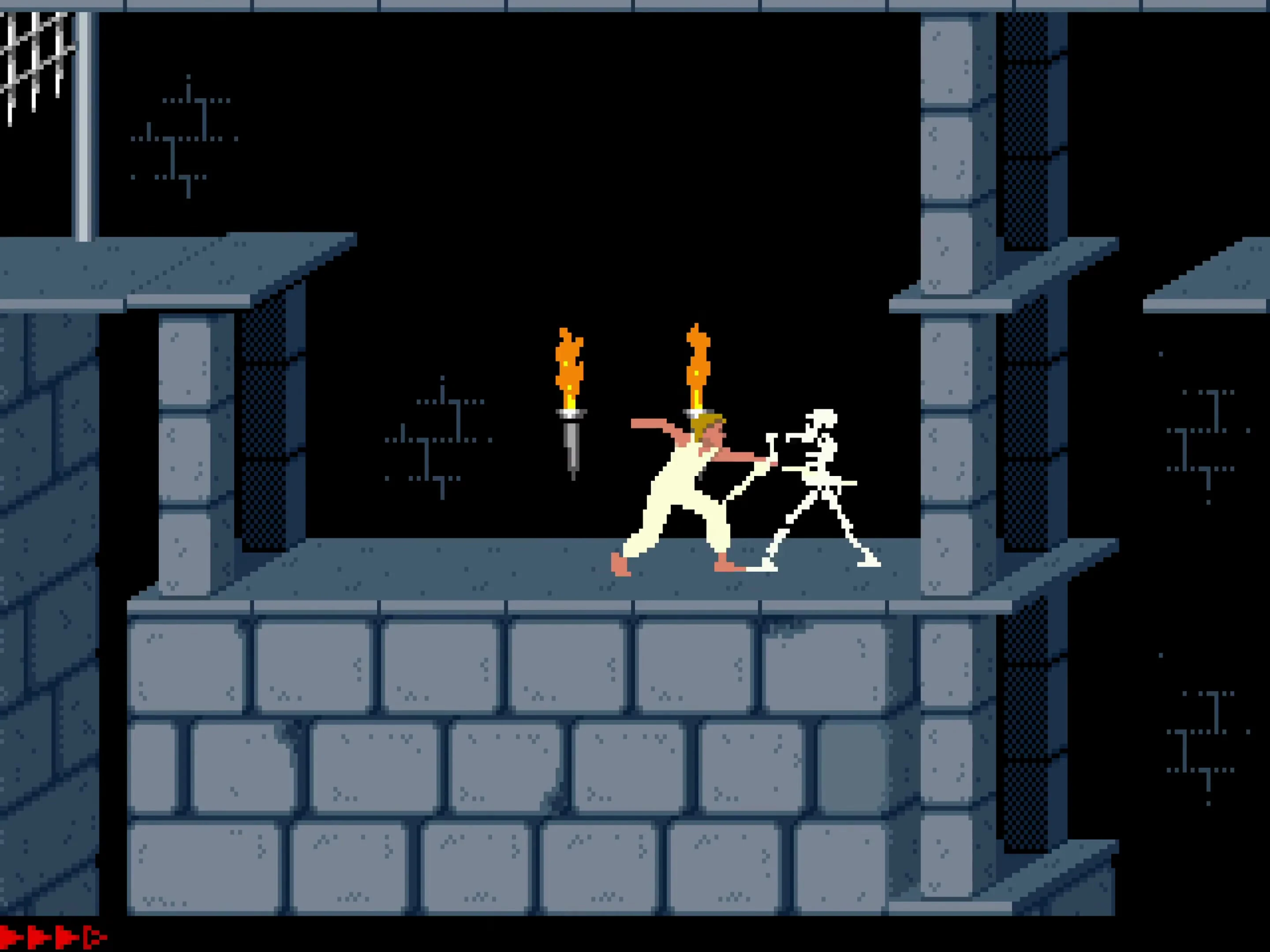
The platform was the Apple II, a computer with a one-megahertz processor and modest memory. Any extra animation took up space, so Mechner counted each frame. For swordfighting, he took a model duel from old Hollywood adventures, and for the general mood he launched “A Thousand and One Nights”. The prince was given one hour to escape from the dungeons and rescue the princess, and the timer ticked right during the game.
The work took four years. Mechner kept a diary, edited levels, remade enemies, and along the way learned that beautiful animation doesn't make the game itself. Traps with falling slabs, spikes, twin mirrors and drop-down floors had to be verified to a second. It was possible to die at any step, and each death taught caution better than any explanation.
In 1989, Brøderbund released the game, and the commercial start proved sluggish. The Apple II was getting older by that time, and owners of new cars were paying attention to other hits. But reviewers and players quickly noticed how lively the hero moves. Then came versions for DOS, Amiga, Macintosh and Japanese consoles, and it was on them that the game found a wide audience.
The rest is known for the next decades: sequels, a three-dimensional restart of Ubisoft, the subway The Lost Crown and many games where the hero clings to the cornice in the same way that David once clinged to the lens. The history of this series began with parking and video cassettes, and the principles of smooth animation can be read in our story.Another World by Eric Shai.
Prince of Persia (1989)
ПлатформыPC, Apple II, Amiga, Mac, консоли
Дата выхода1989
РазработчикДжордан Мехнер
ИздательBrøderbund
ЖанрPlatformer/action