By the time Sensible Software took over Cannon Fodder, the studio was already considered one of the main developers for Amiga: behind them were Wizkid, Mega Lo Mania and especially Sensible Soccer. A team of six people sat in a cramped office from one room, and a new game grew out of Mega Lo Mania. According to John Hare, the basic idea was simple: a strategy where you could send teams on missions, and that was it. But the studio wanted to add action and give the player more direct control while retaining mouse control and badges rare for shooters.
Work began in early 1991, but quickly stalled. Programmer Jules Jameson engaged in conversions of other games on Mega Drive, and Cannon Fodder itself was part of a package of four games agreed with Mirrorsoft publisher Robert Maxwell. After Maxwell's death, Mirrorsoft was liquidated. The studio found a new partner without difficulty: in May 1993, Sensible signed a contract with Virgin, because it seemed to Hare a good choice, and the British head of Virgin Tim Cheney spoke unabashedly.
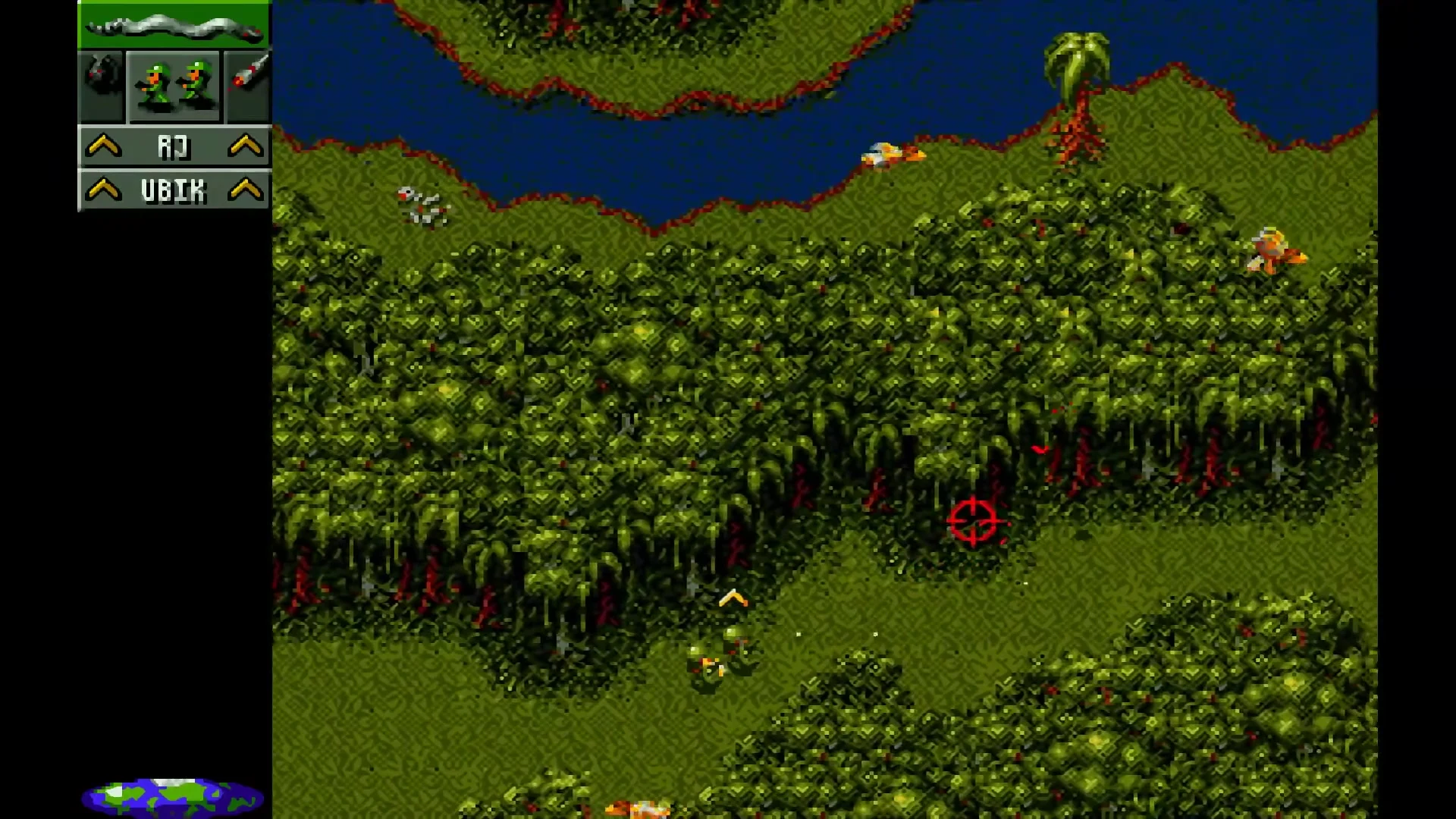
The storyboard team did not draw, instead they wrote descriptions of the idea and the main functions, early chose the corporate look from above and for a long time ran the prototypes, not sparing to throw out the unsuccessful. Artist Stuart Cambridge once said that a studio makes good games because it cuts the weak without fear. At first, the soldiers had their own skills, and the icons in the interface were more, but this was abandoned for the sake of instant action instead of “war games”. Rural landscapes on parts of the levels inspired by the British TV series Emmerdale Farm.
The main finding did not come from mechanics. Each of several hundred identical fighters was given a name, and the dead were placed on the screen with graves: the type of tombstones depended on the rank that the soldier managed to get. According to Hare, names are needed so that the victims do not look faceless, and the graves remind us that people do die. He described the game as anti-war, inspired by "all wars at once," and added that it was the kind of game the studio had always wanted to make.
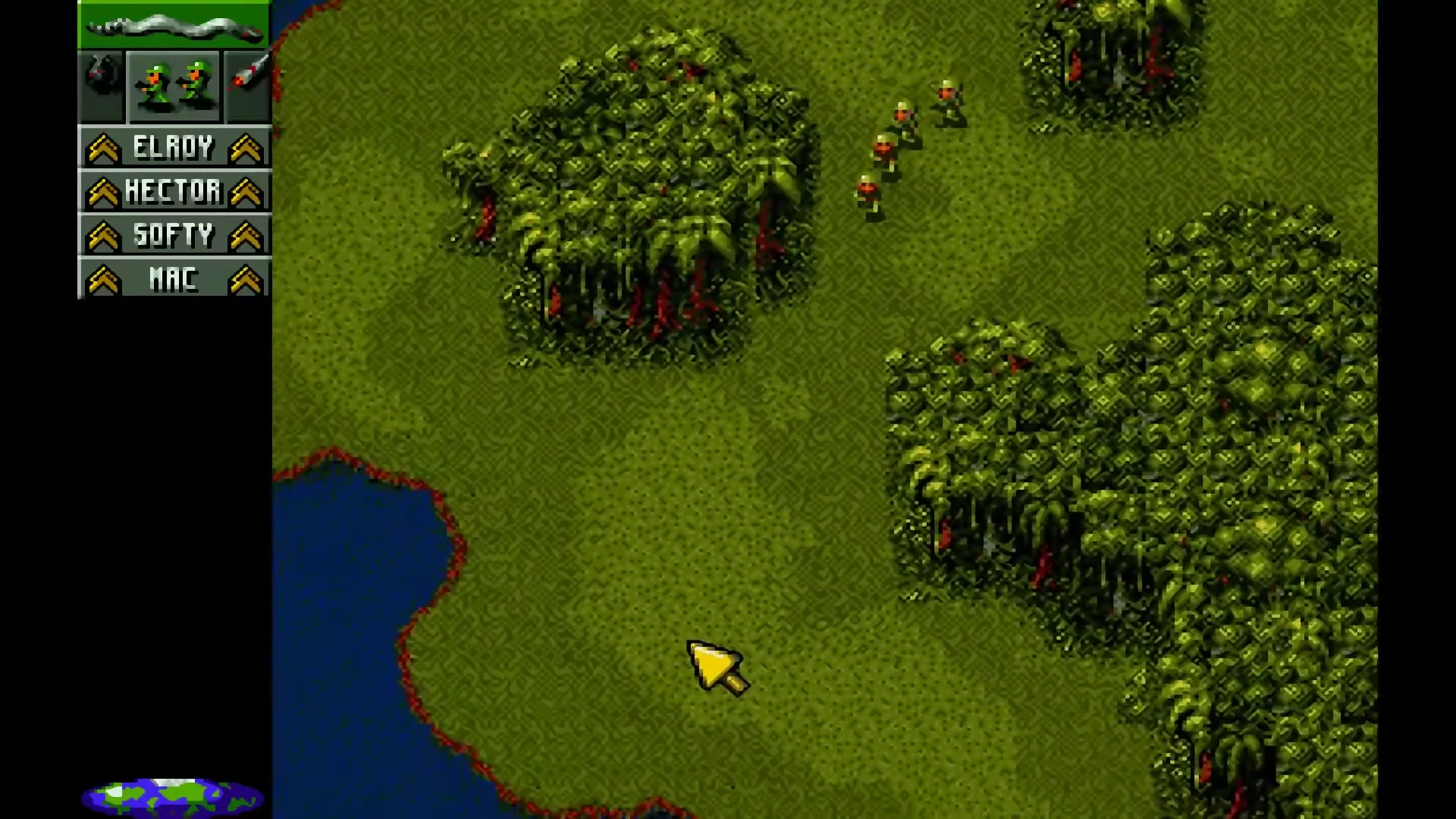
The player was given a squad of up to six people, 24 missions and 72 levels in the jungle, snow and deserts. Soldiers fell from a single bullet, as did enemies, and buildings that produced soldiers had to be detonated with grenades and rockets, the supply of which was limited. A few months before the release, the studio showed a funny demo of Sensible Soccer Meets Bulldog Blighty: instead of a ball, a grenade with a timer flew across the field.
The scandal broke out in October 1993. The Daily Star was outraged by the combination of war and humor, the display of the game in London on Remembrance Day and especially the red poppy badge, a symbol of the memory of the dead. The article quoted the Royal British Legion and MP Menzies Campbell. Virgin initially defended the poppy as an anti-war statement, but left a soldier on the box. On the title screen, the poppy survived.
British magazines about Amiga put the game more than 90%, one called it the best game of the year, and the circulation exceeded 100 thousand copies. Later, Cannon Fodder was released on Mega Drive, SNES, Jaguar, 3DO and other platforms, and the sequel appeared in 1994. Today we see what the newspaper did not notice: a precise statement about the futility of war. Another iconic game of those years for Amiga, we sorted out in history.Another World.
Cannon Fodder (1993)
ПлатформыAmiga, Atari ST, MS-DOS, Super NES, Mega Drive, 3DO, Atari Jaguar
Дата выходаDecember 3, 1993
РазработчикSensible Software
ИздательVirgin Interactive Entertainment
ЖанрShooter/tactics