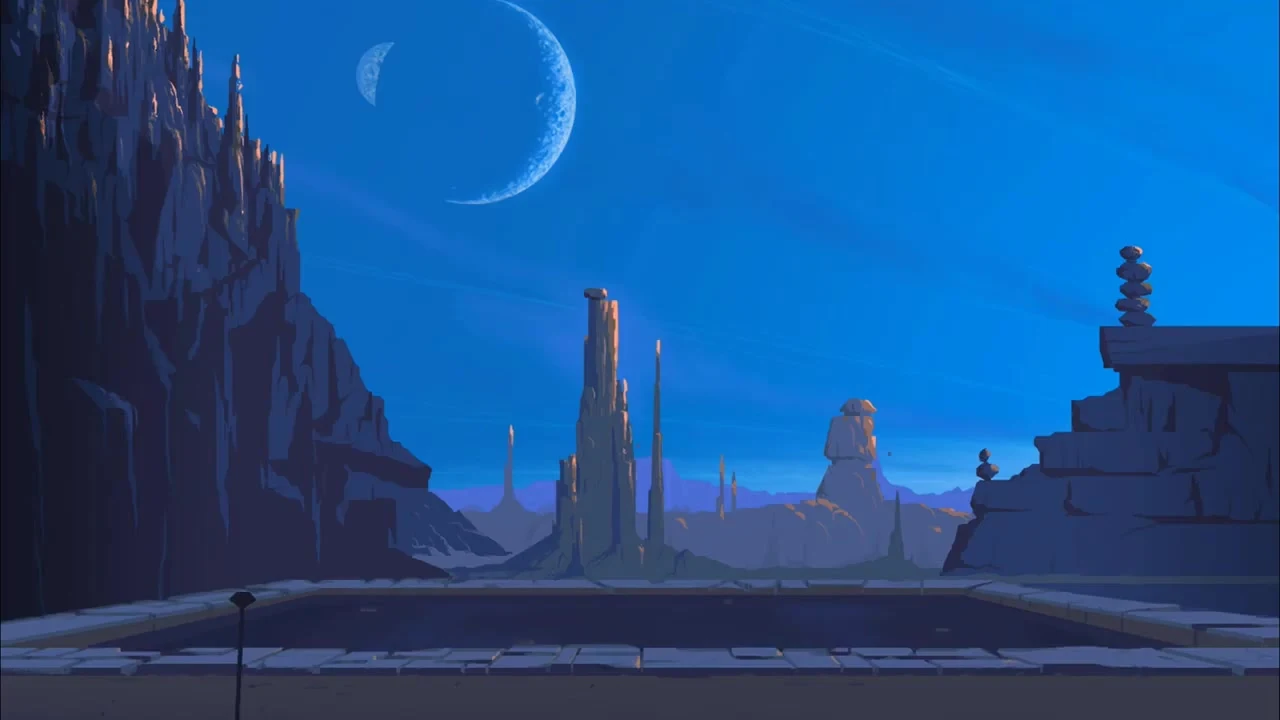
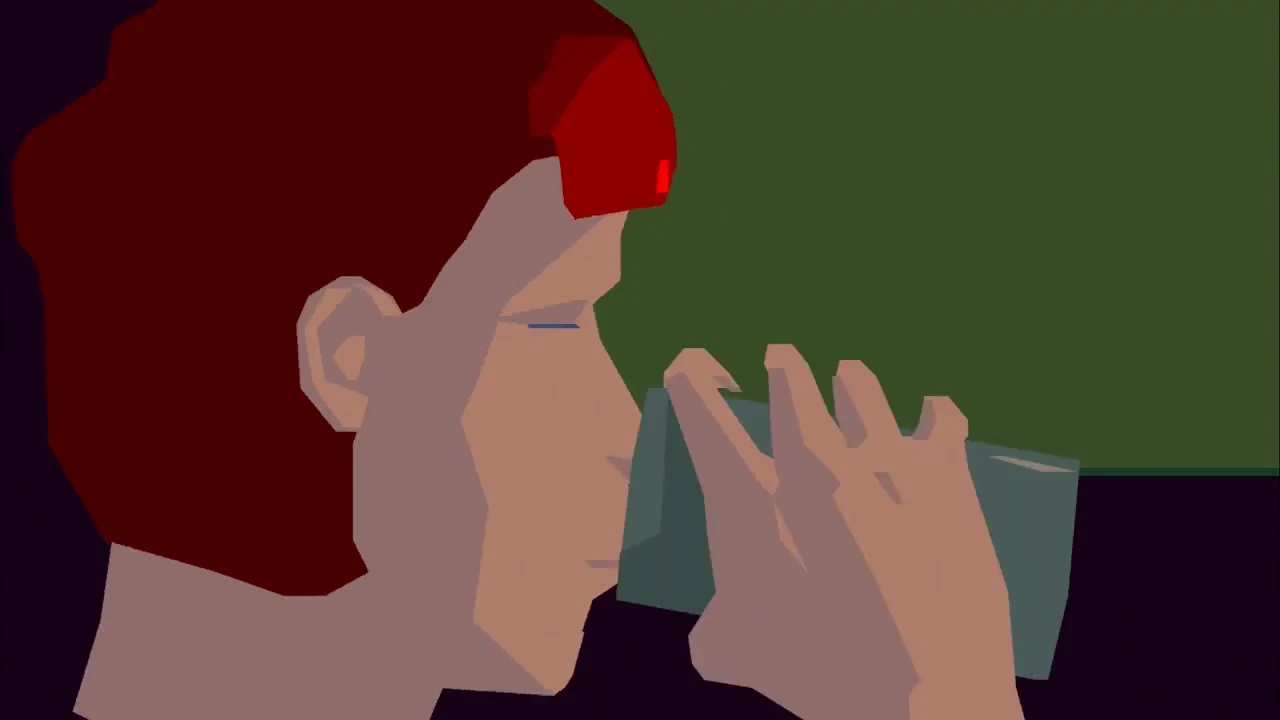
In the summer of 1989, French artist and programmer Eric Shahi saw a version of Dragon's Lair for the Amiga. Flat color pouring on moving figures led him to the idea: if you draw characters not with pictures, but with vector contours, animation will take much less memory. He wrote a polygon rendering procedure for the Motorola 68000 processor on the Atari ST, then ran it on the Amiga and got about twenty frames per second. Later, Shahi himself called this moment a turning point: so he knew that the idea would work.

He was given the freedom to experiment with royalties from Future Wars, an adventure he made with Paul Küsse for Delphine Studios. The choice was simple: help Küsse with the next game or sit down for his own. Shahi chose his own and worked alone, and the music was later written by Jean-François Freitas. To animate the characters, he filmed himself on video and, through the genlock on the Amiga, transferred the movements to polygons. Backgrounds from the same polygons, he also tried, but the process was painfully slow, and the backgrounds had to be returned to raster graphics.
Shahi collected the scenes on homemade tools: the scripting language on GFA BASIC paired with the assembly engine Devpac, which read these scripts during the game. It was essentially a personal animation sequencer. By December 1989, the instruments were ready, and Shahi took up the introductory video and then the first level. He didn’t have a pre-painted plan for the whole game: he walked in order and came up with it on the go. The alien-comrade of the hero in the plan was absent and appeared just so. Shahi wanted to avoid the interface and text, so there are no dialogues or clues in the game, and the characters speak fictional language.
By the seventeenth month of work, only a third of the game was ready, and it became clear that this pace was not suitable. Shahi began to simplify: reused backgrounds and assembled a set of ready-made blocks to devote more time to puzzles. He was also looking for a publisher. Virgin responded favorably, but offered to remake it into point-and-click, and Shahi realized he would have to re-build the game. In June 1991, he accepted Delphine's offer and set a release for Nov. The remainder of the plot was sketched in storyboards, and one of the endings, where Lester became the ruler of an alien world, had to be discarded. The slogan was: The Earth was created in six days, and Another World took two years.
The game was released in November 1991 on the Amiga and Atari ST at 320 x 200 resolution, with copy protection in the form of a code wheel. In North America, it was called Out of This World to avoid confusion with the soap opera of the same name. Interplay, an American publisher, tested the game in its entirety, something Delphine had never done before, and asked for a change in the opening music. Shahi sent them an "endless fax," a piece of paper glued into a loop asking them to leave the original melody, with Delphine's lawyer on his side.
Critics praised the picture and sound, but complained of brevity. Shahi spent two months for sixteen hours a day making a new level in front of the stage in the amphitheater, where an alien rescues Leicester at the end of a long dead end corridor. An additional layer, new dangers and checkpoints were included in the 1992 version of MS-DOS, which was programmed by Daniel Moret. Over the nineties, the game sold about a million copies.
The influence of Another World is still visible: Hideo Kojima called it one of the five games that influenced him the most, and Fumito Ueda referred to it when he created Ico. In 2012, the game was included in the first fourteen video games that were collected by the New York Museum of Modern Art. About another classic with Amiga, which began with a tiny sprite, we wrote separately:Lemmings grew from an eight-pixel figurine and sold 55 thousand copies per day.
Another World
ПлатформыAmiga, Atari ST, ПК
Дата выходаNovember 1991
РазработчикЭрик Шахи
ИздательDelphine Software