Quake was born before id Software made Doom. Back in 1990, John Carmack was driving friends on the Dungeons & Dragons campaign, and among the heroes there was a warrior named Quake with a magic hammer, and an artifact of the Hellgate Cube hovered nearby. The game based on this campaign began to make in 1991, but after a couple of weeks was postponed: then the iron of such a plan did not pull.
Quake returned after Doom II. In late 1994, John Romero suggested making it his next project when Carmack announced the new engine. In the spring of 1995, Michael Abrash, a graphics specialist, joined the team. The idea then sounded medieval: hand-to-hand combat, throwing weapons, hammer strikes on the square and souls for the Hellgate Cube. Romero himself promised a constant and hectic action.
The engine turned out to be much more difficult than expected. Carmack wrote a real three-dimensional core: polygonal models instead of sprites, full 3D levels instead of flat Doom cards, pre-calculated lighting and a client-server network model. Alongside him, Michael Abrash and John Cash worked on the code. Carmack later admitted that the engine and the game were worth doing as separate projects. And QuakeC, which described the logic, opened the way to mods, and they made Quake alive for years to come.
By the fall of 1995, the team was exhausted. During the development, they sketched about fifty levels, but because of the engine edits, they were remade again and again, and many were eventually thrown away. In mid-November, the meeting decided to change course: instead of RPG with a hammer, make a fast first-person shooter. Romero argued, but conceded. From December 1995 until the release, the studio worked in an emergency mode.
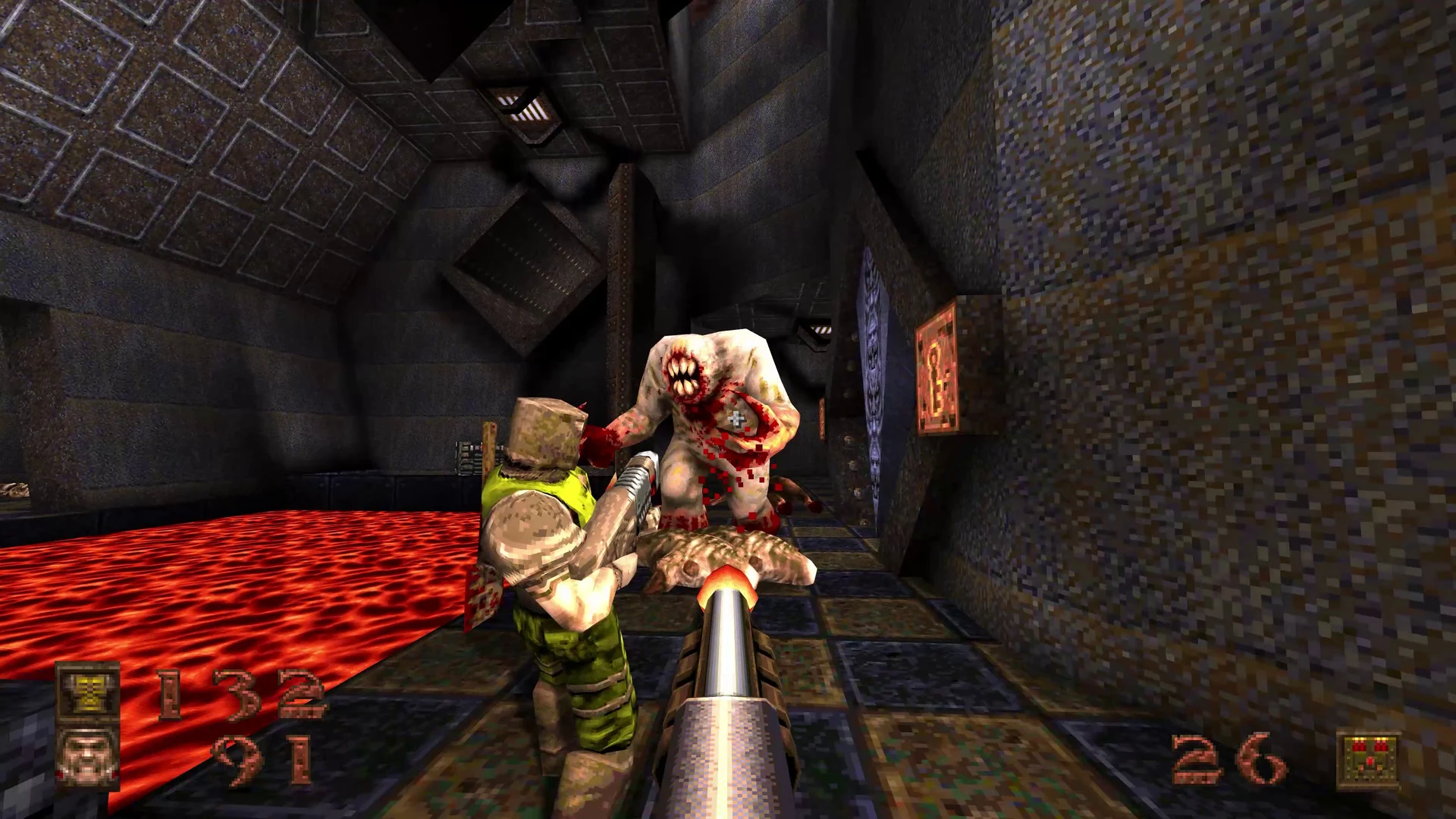
American McGee listened to the Downward Spiral album and offered to call Nine Inch Nails. Trent Reznor and the band recorded grim synthesiser landscapes, and the Quake dungeons sounded very different than the Doom corridors. The network technology was shown in advance: on February 24, 1996, a demo version of QTest with three maps for a network game was released. On June 22, 1996, Romero released a shareware version of Quake for MS-DOS.
After the release, the team began to break up. Romero left id Software in August 1996, and other developers soon left the studio. The game continued to grow: in December 1996, QuakeWorld came out with a prediction of the movement on the client side, which smoothed out the lags in network modem matches, and in January 1997, the beta GLQuake showed Quake with OpenGL acceleration on graphics cards.
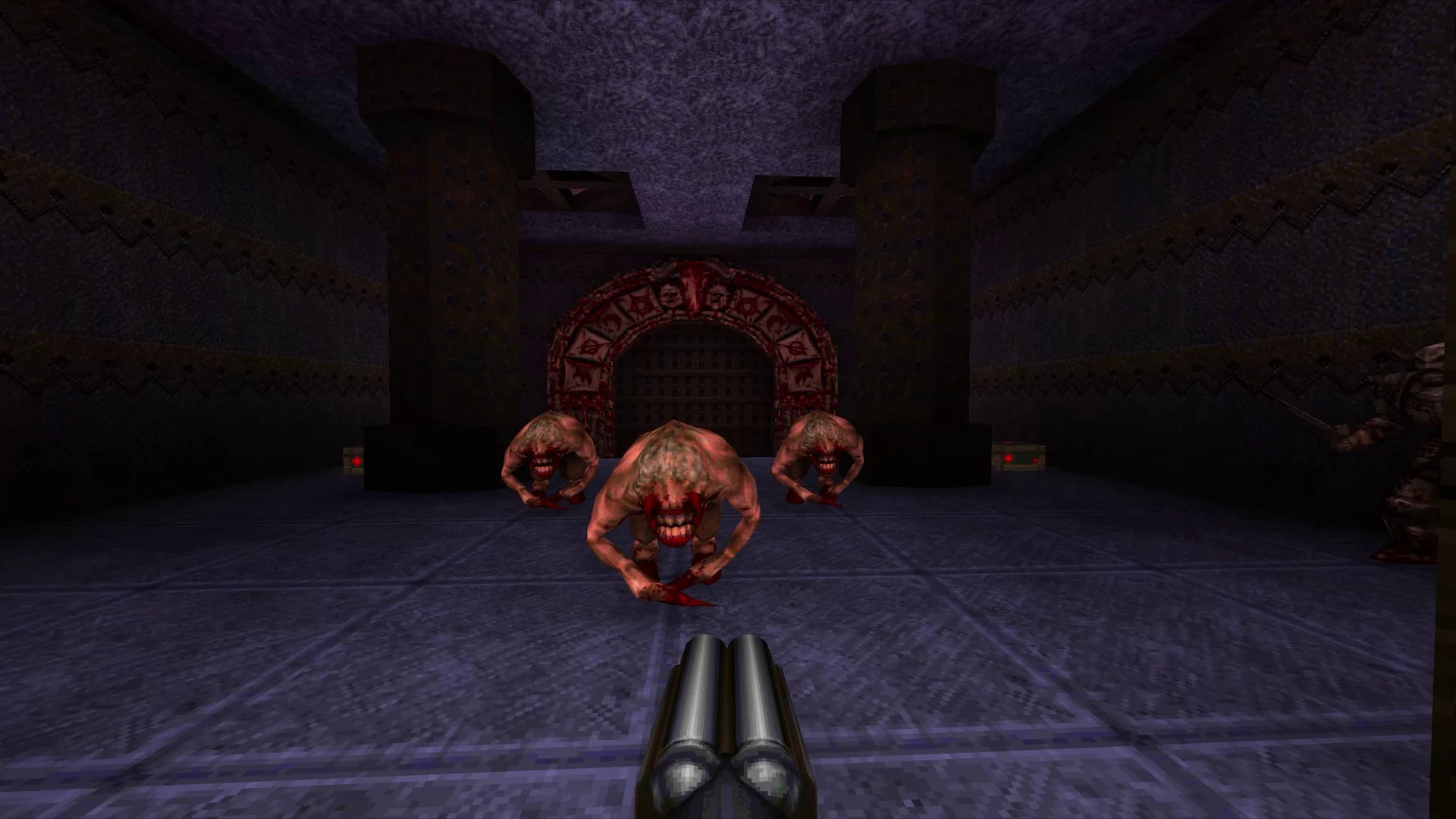
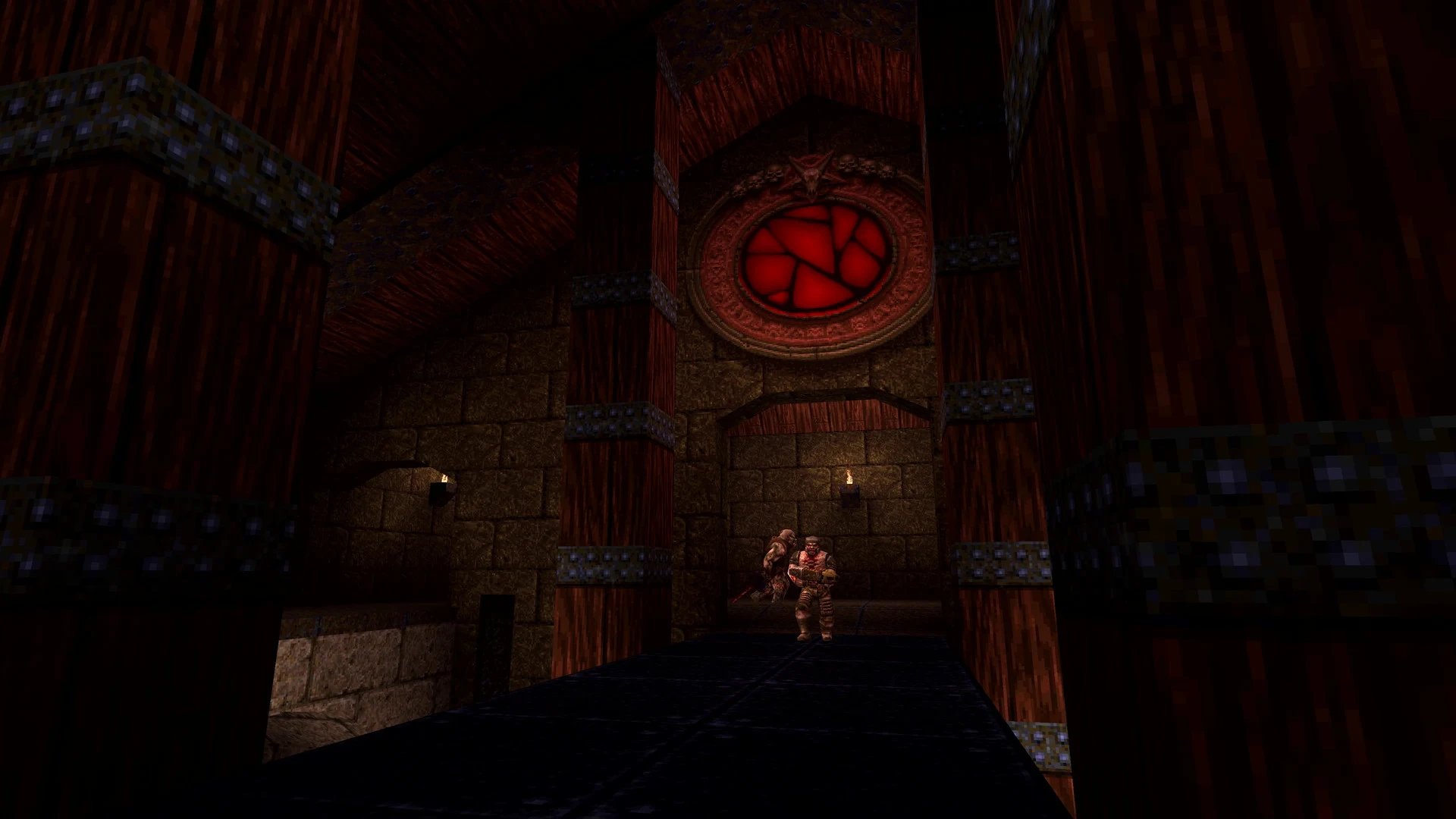
The legacy of Quake is still visible today: network matches, mods on QuakeC and speedranes like the video Quake done Quick, where on June 10, 1997 the game was played at the highest difficulty in 19 minutes 49 seconds. In August 2021, Nightdive released Quake Enhanced with the original soundtrack and add-ons, and you can see footage from this reissue in the article. The 1996 original looked rougher, but the essence remained the same: gloomy halls, lava and crowds of monsters. And the same era on PC, but in the genre of RPG, analyzes our material aboutFallout 1997 and the lost GURPS license.
Quake
ПлатформыПК, MS-DOS
Дата выхода22 June 1996
Разработчикid Software
ИздательGT Interactive