David Braben and Ian Bell wrote Elite while they were at Cambridge. They worked at Jesus College, went into each other's rooms, and the code was mailed on five-inch floppy disks. The work took two years. It all started with a three-dimensional arcade about space combat, and trade was added to it later. It was trade that turned the game into something unprecedented: flying, transporting cargo, hunting pirates and becoming a pirate yourself could be without any ultimate goal.
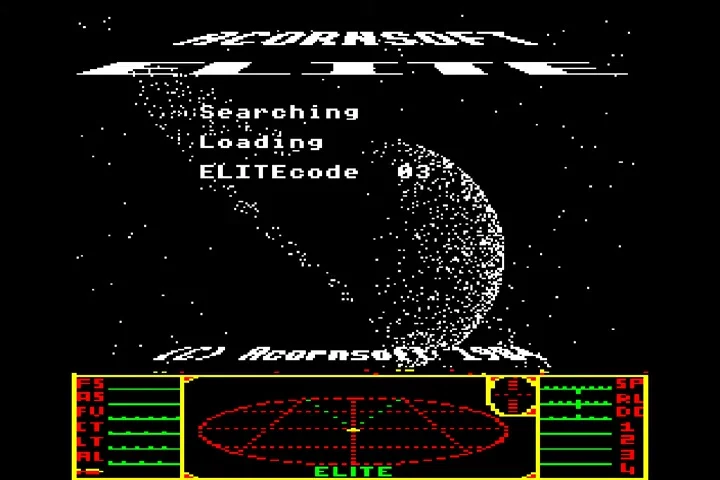
The publishers were scared. Thorn EMI refused and wrote that the game was too difficult: in their opinion, it should be played in ten minutes and with three lives. Acornsoft agreed to release Elite, although it was also doubtful whether the two authors would pull the project. Braben and Bell received an advance of one thousand pounds and seven and a half percent royalties. The publisher allocated fifty thousand pounds for advertising. The game was released for BBC Micro on September 20, 1984, and included a detailed guide and story about the universe.
The main trick is hidden in the structure of the world. The planets were not in memory ready-made: each game was calculated from a number of grains according to a fixed algorithm. So in eight galaxies of 256 planets in each fit about two thousand worlds. The authors conceived much more, according to one version of history, as many as 248 galaxies, but the founder of Acornsoft insisted on a modest size. One galaxy even had to be removed when it found a planet with an indecent name.
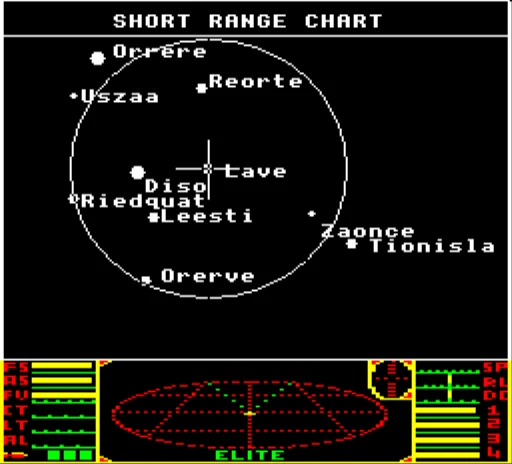
Memory was lacking catastrophically. The entire code occupied about 22 kilobytes: 21,906 bytes of main memory were occupied, only 66 were free. Three-dimensional radar was added last, cramming it into the last unoccupied bytes. Bell recalled that the authors came up with additional fuel tanks, but there was no place for them. The version for Acorn Electron came out about ten percent smaller and did not have Thargoids.
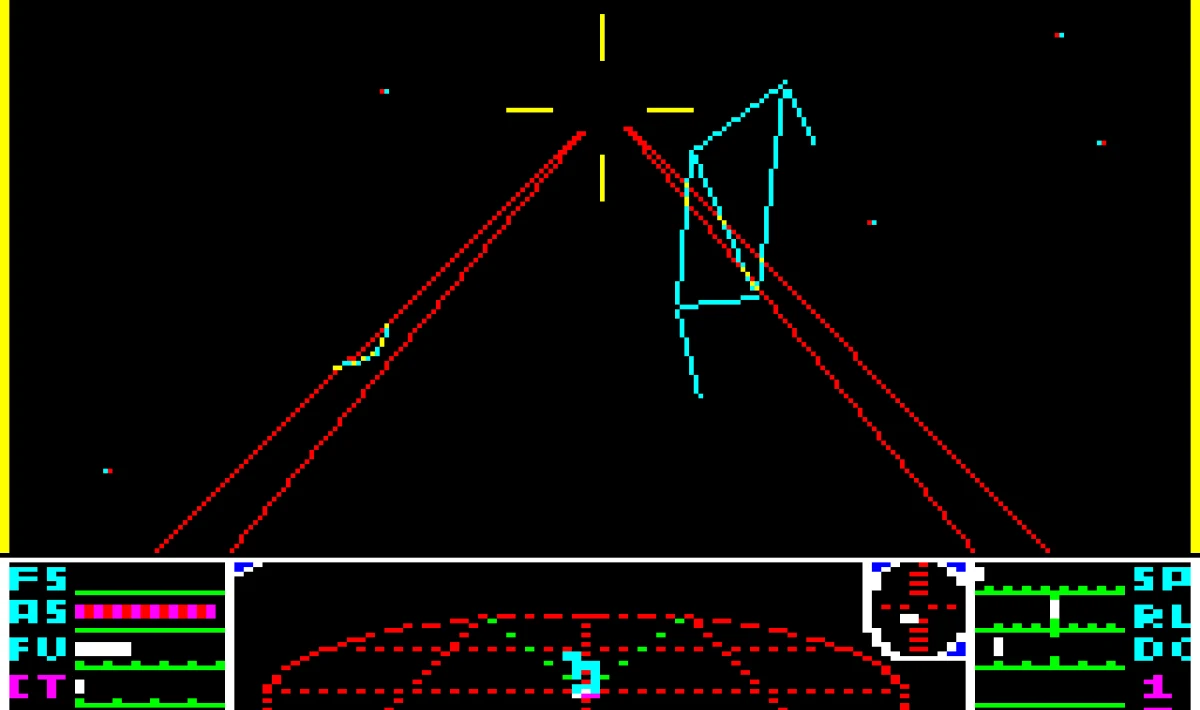
Success came immediately. Only the BBC version sold about one hundred and eight thousand copies, and for the rights to ports for other computers, a real struggle of publishers unfolded, and Telecomsoft won. The total circulation, according to various estimates, lies between six hundred thousand and a million copies. The game won the Golden Joystick award for Best Original, with Sophie Wilson, the creator of the BBC computer itself, calling it "a game that couldn't be written."
The story has a long sequel. Frontier: Elite II was released in 1993, Bell released the source code in November 1999, and Elite Dangerous launched on December 16, 2014, following a Kickstarter campaign in 2012. In 2015, Guinness World Records recognized Elite as the first game to feature a procedurally created world. Another British classic of the eighties, the story of the miner Willie, we analyzed in the material.Manic Miner.
Elite
ПлатформыBBC Micro
Дата выходаSeptember 20, 1984
РазработчикДэвид Брэбен, Иан Белл
ИздательAcornsoft